
Training in Equine Assisted Therapy
Thinking About Adding Equine Assisted Therapy to Your Clinical Skills?
Equine Assisted Therapy (EAT) is a rewarding treatment approach that can benefit a wide range of clients, particularly those with neurological, developmental, and postural challenges. It offers a unique opportunity to combine clinical expertise with the therapeutic potential of the horse and the equine environment.
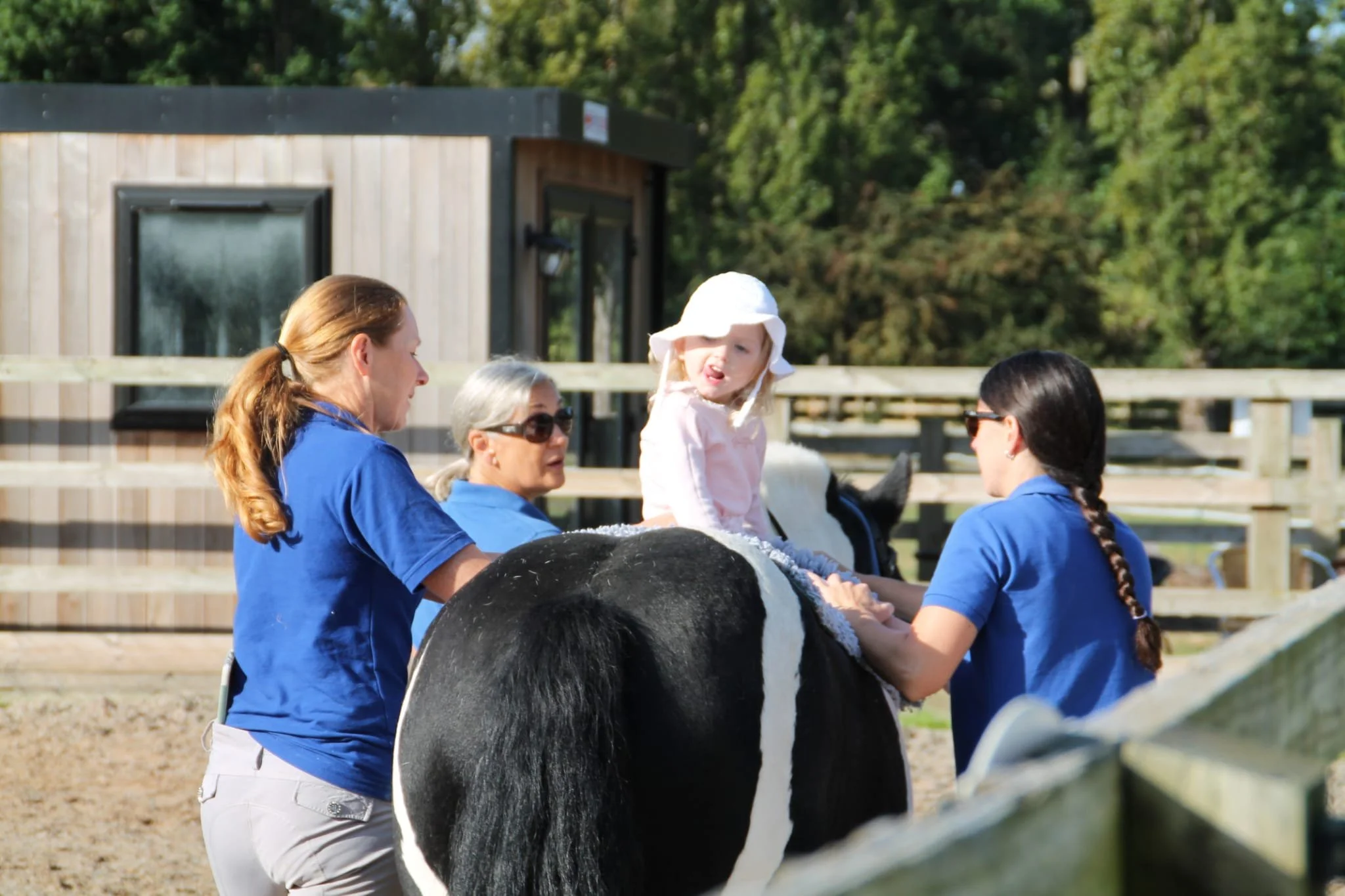
Equine Assisted Therapy (which encompasses Equine Assisted Physiotherapy, Occupational Therapy and Speech and Language Therapy) is a specialist area of practice in which allied healthcare professionals integrate their clinical skills within the equine environment to support therapeutic outcomes. EAT encompasses a range of interventions, including hippotherapy, where the movement of the horse is incorporated into treatment; equine groundwork, and riding for therapy. Through these approaches, therapists can address physical, cognitive, communication, sensory, behavioural, emotional, and psychosocial goals while working within their professional scope of practice.
Entering the field of EAT requires commitment, resilience, and a willingness to continually develop both clinical and practical skills. In the UK, many Equine Assisted Therapists work independently as sole traders, which can feel daunting for therapists who are new to running their own practice.
Successful EAT practice requires strong clinical reasoning, excellent handling skills, and the ability to multitask and make decisions quickly. During a typical session, you may be:
Assessing, treating, and positioning your client
Directing one or more side walkers
Communicating with the horse leader
Monitoring the client's response to treatment
Planning and adapting interventions in real time
Although the work can be demanding, therapists often find EAT to be an exceptionally rewarding area of practice. Many report seeing meaningful functional improvements in their clients, while service users frequently describe high levels of satisfaction with therapy delivered in this environment.
Working in EAT also develops valuable professional skills, including observation, handling, clinical reasoning, and problem-solving, all of which can strengthen your wider clinical practice.
Routes into Equine Assisted Therapy Training
ACPEA currently recognises two established pathways into EAT practice. While each programme takes a slightly different approach, both provide high-quality education & training to help allied health professionals develop the knowledge and skills required to practise safely, within their professional scope.
SVITANI Academy of Equine Assisted Services

The SVITANI programme is delivered over approximately 15 months and consists of two stages:
Core Principles - Introductory Course
Clinical Specialist - level 5 qualification
Core Principles Introductory Course
The Core Principles course provides a broad introduction to Equine Assisted Services through a series of self-paced online learning modules.
The course currently costs €370.
Topics include:
Understanding Equine Assisted Services
Teamwork, health and safety, and ethics
Equine selection, welfare, anatomy, and movement
Equine-assisted disciplines and fields of practice
Record keeping, funding, and research
Treatment principles, indications, safety, and client handling
(Completion of the Core Principles course is required before enrolling on the SVITANI OCN Level 5 Equine Assisted Therapy Clinical Specialist Course).
SVITANI / OCN Level 5 Equine Assisted Therapy Clinical Specialist Course.
This OCN London-accredited programme is designed for Allied Health Professionals and brings together physiotherapists, occupational therapists, and speech and language therapists. The multidisciplinary format encourages shared learning and broadens clinical perspectives.
The course includes approximately 300 hours of study and is delivered entirely online, allowing participants to continue working while studying. Competent horse handling skills and a sound level of equine knowledge are essential entry requirements.
To complete the Clinical Specialist course, participants must complete:
A ridden dressage test submitted by video
A virtual centre project
Two case studies
Forty hours of practical experience
The practical experience involves observing practising equine assisted therapists and assisting with therapy sessions. As there are currently relatively few practising therapists in the UK, participants may need to visit several clinicians across the UK and Europe to gain sufficient experience.
Learners are encouraged to attend at least two ACPEA study days as part of their practical development and to visit a variety of practising clinicians. SVITANI also offers therapy practice days at venues across Europe. Participants are responsible for arranging and funding their own practical experience and attendance at these events.
SVITANI has kindly offered ACPEA members a €30 discount on the clinical specialist course fees. A discount code can be requested through the ACPEA enquiry page link .
The next cohort begins in October 2026. The clinical specialist course currently costs €1,280.
Ulster University PGCert in Advancing Practice – Equine Assisted Therapy

The Ulster University programme is a Level 7 postgraduate pathway delivered over approximately 12 months, followed by completion of a case study.
The Equine Assisted Therapy modules (AHP806, AHP807 and AHP808) form part of the MSc Advancing Practice pathway. Each module carries 30 credits. Successful completion of two modules leads to the award of a Postgraduate Certificate in Advancing Practice: Equine Assisted Therapy.
Each 30-credit module currently costs approximately £1,250.
The programme is open to qualified:
Physiotherapists
Occupational Therapists
Speech and Language Therapists
Students must successfully complete Module 1 before progressing to Module 2. Module 3 can be undertaken independently and has no prerequisite.
Module 1: AHP806 – Equine Assisted Therapy: The Equine and the Therapeutic Environment
This module develops knowledge of:
Equine psychology and behaviour
Equine communication
Equine anatomy and biomechanics
Horse management, health, and welfare
The aim is to enable clinicians to select, assess, and evaluate horses for EAT, including hippotherapy, groundwork, and riding for therapy and learning.
Structure
Ten live online theory sessions
Practical Component
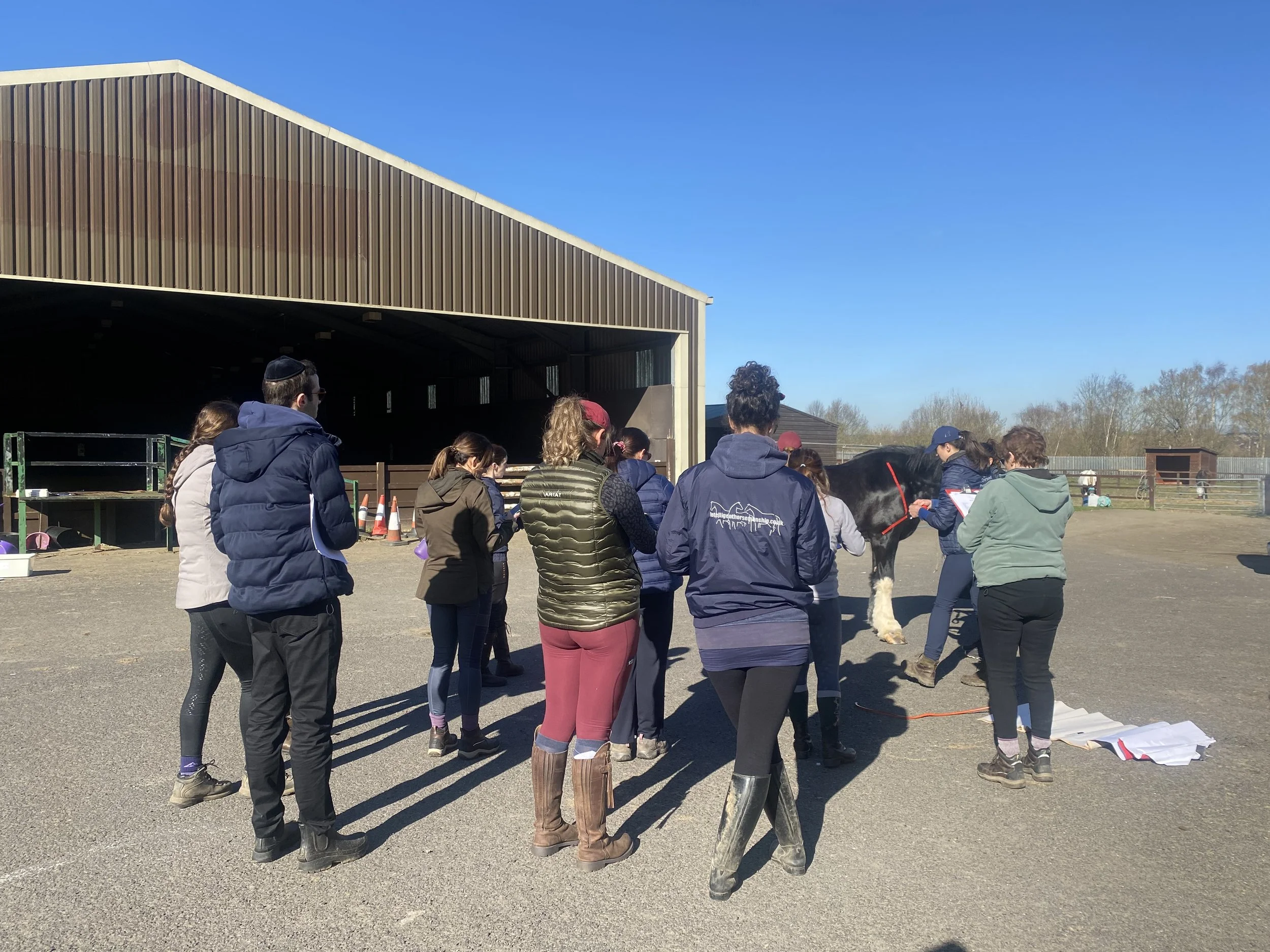
Three-day face-to-face practical course
Usually held in England or Scotland
Venue confirmed annually
Module 2: AHP807 – Clinical Practice in Equine Assisted Therapy for Allied Health Professionals
This module supports clinicians in integrating their professional skills into the equine environment and delivering a range of Equine Assisted Therapy interventions, including:
hippotherapy,
groundwork, and
riding for therapy and learning
Structure
Ten live online theory sessions
Practical Component
Four-day face-to-face practical course
Usually held in England or Scotland
Venue confirmed annually
Module 3: AHP808 – The Application of Equine Groundwork in Clinical Practice
This module enables clinicians to develop and apply groundwork-based assessment and intervention strategies within clinical practice.
Structure
Blended learning format
Online theory sessions
Four-day practical component
For further information, prospective students please contact the module coordinator, Mrs Orlagh Daly, at Ulster University – o.daly@ulster.ac.uk
Interested in Pursuing Equine Assisted Therapy?
If you are considering training in EAT and would like guidance on which route may be right for you, or would like advice on gaining experience in the field, ACPEA would be pleased to help.
Please contact ACPEA for further information and support as you begin your journey into EAT practice.